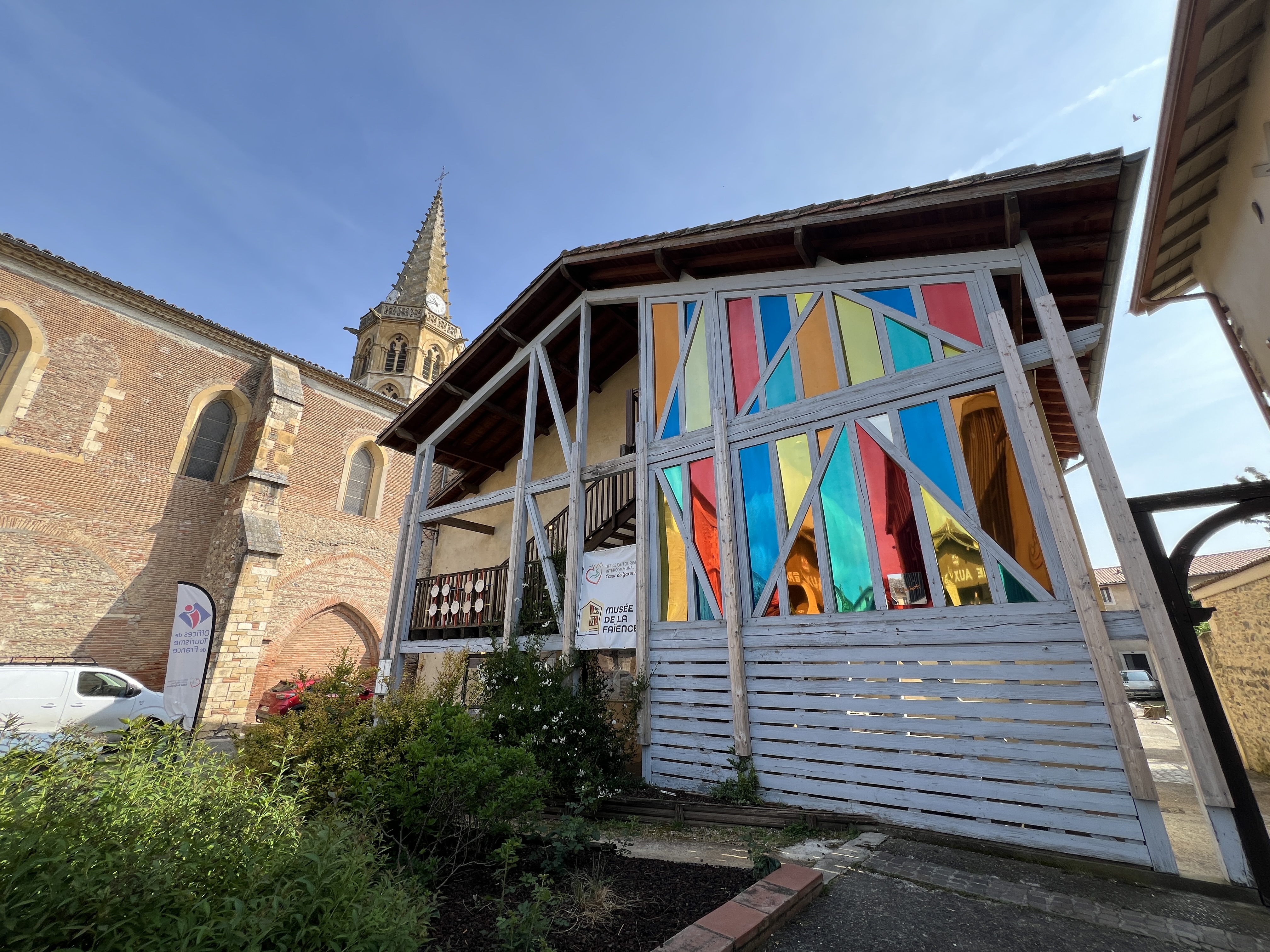
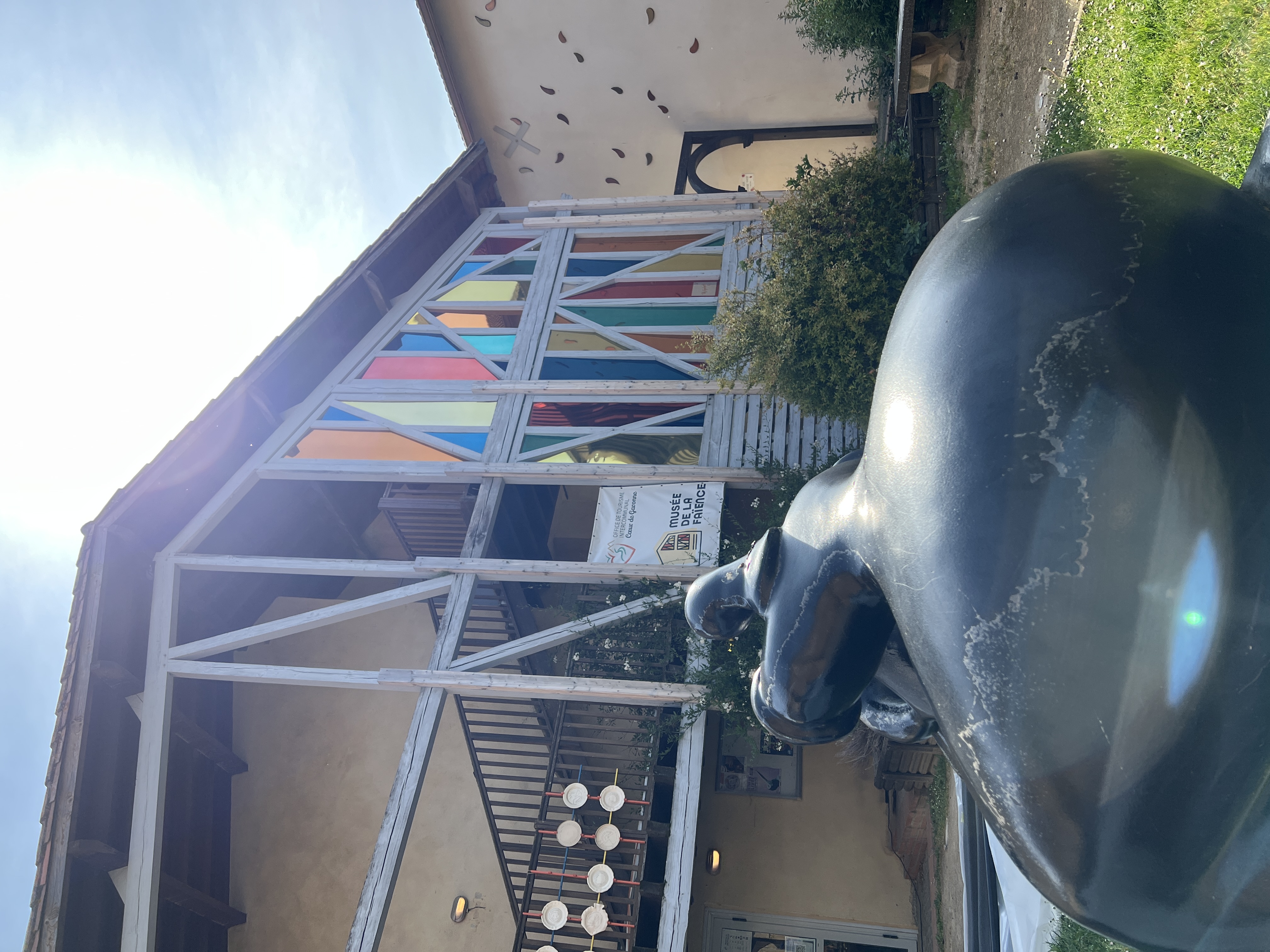
In place of the small garden in front of the tourist office was the old town hall and its adjoining prison. In 1954, you could still see the façade of the prison, which was mainly used after the Revolution.
Three old houses followed, including that of a grocer and a wheelwright. This block of buildings underwent 4 years of renovation in 2002.
In 2006, the Centre d’interprétation du patrimoine martrais, now the Musée de la faïence, opened its doors to the public.
On the ground floor is the Tourist Information Office of the Cœur de Garonne Intercommunal Tourist Office. BIT staff are responsible for opening and providing information about the Museum (located upstairs).
Located in the town’s historic centre, the exhibition is housed in a 380m2 building that combines three old houses that have been completely remodelled. Visits to the Museum are free of charge.
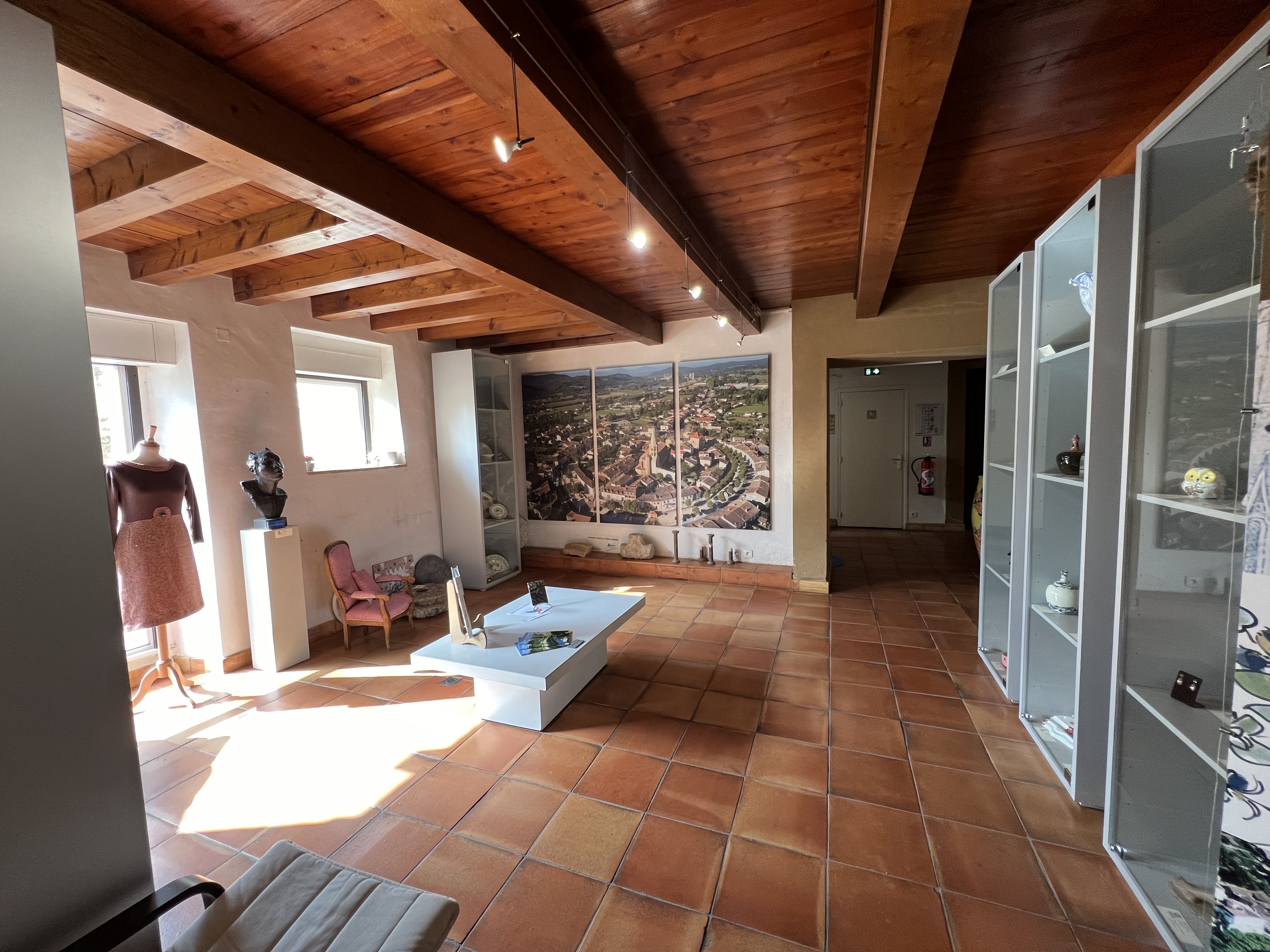
The visit begins on the ground floor, where a space is dedicated to the village’s craftsmen (and more particularly the earthenware makers still in business). You’ll also see some unique pieces created in collaboration with the various Salons des Arts et du Feu, the village’s flagship event for over 25 years.
The first floor is dedicated to the history of the village, with a special section on the village’s rich ancient history, including a plan of the famous Roman villa at Chiragan. There is also a room dedicated to the legend of Saint-Vidian (patron saint of the village).
Another room is dedicated to the history of earthenware in France, and more specifically in Martres-Tolosane. Various objects and a short video explain the stages in the manufacture of earthenware in Martres. A display case is dedicated to the decorations, their history and the techniques used to create them.
The second floor is mainly devoted to Martres earthenware. There is an impressive and magnificent collection of old earthenware. This area offers an exhaustive overview of the different styles, motifs and representations of local earthenware since the early 18th century.
You’ll also find unique pieces created in collaboration with various Salons des Arts et du Feu, the village’s flagship event for the past 23 years. A number of pieces by leading European ceramists (Modra, Naval, etc.) are also on display.
A small temporary exhibition room also hosts around 3 exhibitions a year (crafts or art more generally).
This exceptional space will celebrate its 20th anniversary in 2026.
This exceptional venue will celebrate its 20th anniversary in 2026. To mark the occasion, the museum’s usual exhibitions have been replaced by participatory exhibitions involving the local community, showcasing earthenware workshops past and present. The museum’s location on the map is not accurate.
Where the small garden in front of the tourist office now stands, there used to be the old town hall and its adjoining prison. As late as 1954, the prison’s façade was still visible; it was used mainly after the Revolution.
Next came three old houses, including those of a grocer and a wheelwright. This block of buildings was renovated over a four-year period starting in 2002.
In 2006, the Martrais Heritage Interpretation Centre – now renamed the Museum of Earthenware – opened to the public.
On the ground floor is the Tourist Information Office of the ‘Cœur de Garonne’ inter-municipal tourist board. Staff at the Tourist Information Office are responsible for opening the museum and providing information about it (which is located on the upper floors).
Situated in the town’s historic centre, the exhibition is housed in a 380m² building comprising three fully refurbished historic houses. Admission to the museum is free and open to all.
The tour begins on the ground floor, where a section is dedicated to the village’s craftspeople (and more specifically the pottery makers still in business). Here you will also discover unique pieces created in collaboration for various ‘Salons des Arts et du Feu’ – an event that has been a hallmark of the village for over 25 years.
The first floor is dedicated to the history of the village, notably featuring an area on the area’s rich ancient history, including a plan of the famous Roman villa at Chiragan. There is also a room dedicated to the legend of Saint Vidian (the village’s patron saint).
Another room is dedicated to the history of earthenware in France, and more specifically in Martres-Tolosane. Various objects and a short video explain the stages involved in producing earthenware in Martres. A display case is dedicated to the decorative motifs, their history and the techniques used to create them.
The second floor is mainly devoted to Martres earthenware. Here, visitors can discover an impressive and magnificent collection of antique earthenware. This area offers a comprehensive overview of the various styles, motifs and depictions found in local earthenware since the early 18th century.
You will also discover unique pieces created in collaboration with other artists for various editions of the ‘Salons des Arts et du Feu’, an event that has been a hallmark of the village for the past 23 years. A few pieces from European ceramics centres are also on display (Modra, Naval, etc.).
A small temporary exhibition room also hosts around three exhibitions a year (featuring craft or art more broadly).
This exceptional venue will celebrate its 20th anniversary in 2026.